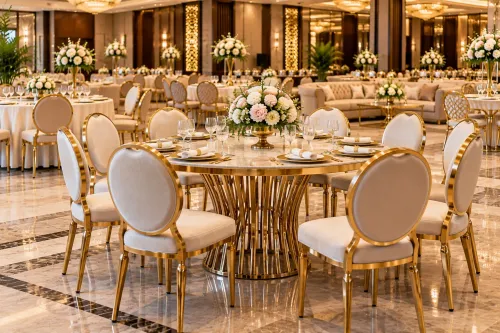
A steel banquet chair can look substantial yet fail at a weld, lose its coating around an unsealed tube end, or become uncomfortable before a four-hour function ends. You will be able to compare frame construction, verify finish quality, match dimensions to your room, assess upholstery, and write an acceptance checklist for Noida’s humid, dusty operating conditions.
Key takeaways
- Specify steel grade, tube diameter, wall thickness, welds and seat joints together.
- Test chairs for wobble, racking, load performance and repeated banquet handling.
- Inspect powder coating for complete coverage, adhesion, chips and corrosion-prone edges.
- Choose seat cushioning, back support and geometry for four- to six-hour events.
Specify the Complete Steel Frame, Not Tube Thickness Alone
A steel banquet chair is built for repeated commercial use only when the complete frame is specified, not wall thickness alone. Require the steel grade, tube outside diameter and wall thickness together; heavier tube can still fail at a weak weld or seat-to-frame joint.
Ask the supplier to state these construction details in writing:
- Steel grade and tube profile for legs, rails and back posts
- Tube outside diameter and wall thickness for each frame section
- Bend radii, because tight bends can weaken or wrinkle the tube
- Weld type, weld continuity and whether welds are ground smooth
- Joint design at the seat, backrest, leg intersections and stacking points
- Cross-bracing, gussets or reinforcement used to resist sideways racking
- Fastener type and locking method where the frame is bolted rather than welded
Specify EN 16139, the standard for strength, durability and safety of non-domestic seating, with the intended severity level. A stated maximum load proves only one static event; it does not show resistance to repeated sitting, dragging, stacking or impact during banquet turnover.
Request separate evidence for static-load, repeated-load, backrest, leg, seat-to-frame and stability testing. These expose different failures, including permanent deformation, cracked welds, loose fasteners, broken glides and backrest separation. Compare chair mass with the verified durability result, stack height and carrying points: excessive weight increases reset labour and handling risk.
Use Durability and Stability Tests That Match Banquet Handling
A stated maximum load proves only that a chair held weight once. Require a report to EN 16139, the non-domestic seating standard, with the use severity and test configuration identified; it evaluates strength, durability and safety under repeated commercial use.
Request separate results for these checks:
- Static-load test: reveals permanent bending of the seat, legs or frame.
- Fatigue test: exposes cracked welds, loosened fasteners and weakening after repeated sitting and resetting.
- Backrest test: checks separation or distortion when guests lean back.
- Leg and seat-to-frame tests: identify broken joints, pulled fasteners and frame twist.
- Stability and racking tests: show whether sideways dragging, uneven floors or a sudden pull can tip the chair.
- Glide and impact checks: reveal damaged feet and failures caused by lifting, dropping or repositioning chairs.
For stackable models, require the tested chair count and stack height, permissible lean or nesting offset, and confirmation that arms, upholstery and protective glides were installed during testing. A “10-chair stackable” claim means little without those details; the lower frame could deform while the stack remains upright.
Inspect welds under bright light. Look for undercut, porosity, incomplete fusion, sharp spatter and coating breakdown. Grinding can hide a defect, while excessive grinding removes section thickness at a stressed joint. Ask for the fatigue-test report and weld inspection record, not just a load number.
Choose and Inspect a Finish for Noida’s Moisture and Dust
A fully enclosed, ventilated hall suits powder coating over cleaned steel with iron or zinc phosphate pretreatment. A semi-open venue needs hot-dip galvanisation, or a duplex system combining galvanisation with powder coating. Poorly ventilated storage deserves galvanisation first because trapped humidity attacks unsealed steel fastest.
| Location | Suitable finish | Specify and inspect |
|---|---|---|
| Indoor hall | Powder coating | Powder type, pretreatment, target dry-film thickness, cure window and continuous coverage |
| Semi-open venue | Hot-dip galvanisation or duplex coating | Zinc coverage, sealed tube ends, protected welds and topcoat continuity |
| Poorly ventilated storage | Galvanisation, preferably with powder coating | Drainage, capped ends, no moisture traps and intact coating at bends |
Do not accept “good adhesion” as a specification. Require an ASTM D3359 cross-hatch or X-cut tape-adhesion result on representative welded and bent sections, not only a flat panel. Inspect coating around welds, tube ends, corners and bends for pinholes, bubbling, flaking, overspray and sharp edges.
Reject or investigate any of these early warning signs:
- Orange staining at welds, scratches or cut edges
- Blisters that feel raised under a fingernail
- White powder or damp residue inside an uncapped tube
- Exposed steel where a glide has worn through the finish
- Rust emerging from a joint after wet cleaning
Treat ASTM B117 salt-spray hours as a comparison, not a service-life promise. Ask for the scribe method, exposure duration and evaluation criteria, then judge them against Noida’s monsoon humidity, wet cleaning and storage conditions.
Match Chair Geometry and Upholstery to Four- to Six-Hour Events
A four- to six-hour function needs the right seat height, usable seat width, seat depth and support—not simply thick upholstery. Start by comparing these measurements with the table height, user population and the space needed for occupied chairs beside aisles.
| Check | Practical starting point | What failure looks like |
|---|---|---|
| Seat height | 430–480 mm | Knees too high or feet cannot rest comfortably |
| Usable seat width | 420–480 mm between side bolsters or arms | A chair appears wide outside but feels restrictive |
| Seat depth | 400–470 mm from back support to front edge | Short users lose back support or the edge presses behind the knees |
| Seat-to-table fit | Confirm clearance with the cushion compressed | Knees strike the apron, forcing users to sit sideways |
Measure usable seat width inside the upholstery, not the chair’s outside width. Confirm that the total chair width, pulled-out position and occupied-user clearance preserve the planned aisle; a broad frame can turn a compliant layout into a cramped one.
Foam density alone does not predict comfort. Request density, hardness or indentation-force data, upholstered thickness and a sample tested after repeated compression. Reject a cushion that bottoms out, pushes against the front of the thighs or leaves the lower back unsupported.
Before approval:
- Sit for at least 30 minutes and check thigh pressure, back support and posture.
- Test the chair at the actual banquet table with the cushion compressed.
- Pull out and replace adjacent chairs to expose aisle interference.
- Inspect seams, corners and upholstery tension after repeated sitting.
Turn the Specification Into a Supplier and Delivery Acceptance Checklist
Accept the order against a written schedule, not a catalogue description. Require the supplier to identify each model, steel grade, tube profile, weld or bolt construction, safe working load, finish system, upholstery specification and replacement parts.
1. Request a signed test record covering separate static-load, repeated-load, backrest, leg, seat-to-frame and stability tests. Record the test load, repetitions, failure criteria and sample identification; one seat-load result cannot prove weld, leg or backrest durability.
2. Specify stacking as a tested configuration: number of chairs, stack height, permissible lean or nesting offset, and confirmation that arms, upholstery and protective glides were installed. Reject a “stackable” claim without these figures.
3. Request the fabric abrasion test method and result. Martindale and Wyzenbeek cycles are not interchangeable. Also record seam strength, pilling, colourfastness, stain-cleaning instructions and replacement-cover availability.
4. On the banquet floor, inspect every sample across tile joints, uneven tiles, carpet transitions and floor edges. Apply your written rocking limit, check that chairs do not twist or slide, and confirm the approved glide type for each floor finish.
5. Build and test the declared stack, then check crushed upholstery, frame contact marks, bent legs and glide damage. Confirm spare replaceable glides and fasteners are available.
The Comfort Seatings can be evaluated fairly using this same model-specific schedule rather than accepting a general durability statement. Photograph defects and record batch numbers before signing delivery acceptance.
Related products
 | Banquet Chair Enhance the elegance of your event spaces with premium-quality banquet chairs from The Comfort Seating. View product → |
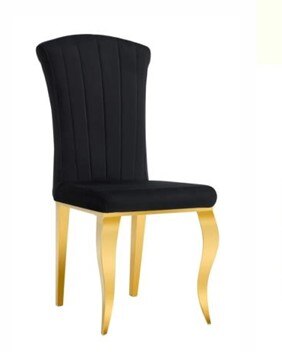 | Banquet Chair At The Comfort Seating, we focus on both aesthetics and functionality. View product → |
Frequently asked questions
What should you specify besides banquet chair tube thickness?
Specify the steel grade, tube outside diameter, wall thickness, weld quality, frame geometry and seat-to-frame joint construction.
Which tests reveal whether a banquet chair can handle repeated movement?
Check for wobble, frame racking, loose joints, weld defects and damage after repeated lifting, stacking, dragging and setup.
How should you inspect a banquet chair finish in Noida?
Look for continuous coating coverage, consistent colour, secure adhesion, protected tube ends and chips or scratches that expose steel.
What makes a banquet chair comfortable for a four- to six-hour event?
Match seat depth, seat height, back angle, lumbar support and cushioning density to prolonged seated use.
What belongs on a banquet chair delivery acceptance checklist?
Record the approved frame specification, finish, upholstery, dimensions, quantity, packaging condition and inspection results for every delivery.
Related products
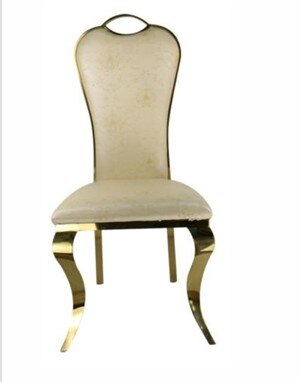 | Banquet Chair At The Comfort Seating, we focus on both aesthetics and functionality. View product → |
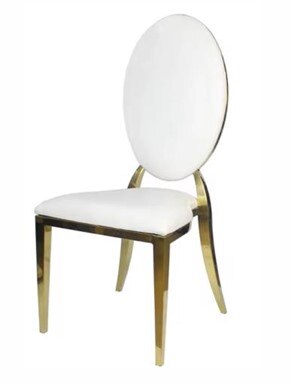 | Banquet Chair At The Comfort Seating, we focus on both aesthetics and functionality. View product → |
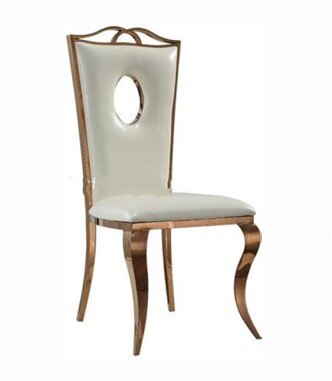 | Banquet Chair At The Comfort Seating, we focus on both aesthetics and functionality. View product → |
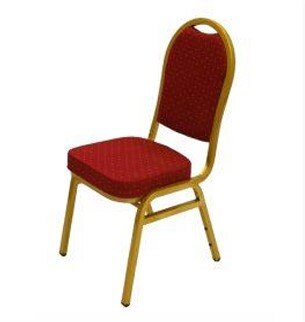 | Banquet Chair At The Comfort Seating, we focus on both aesthetics and functionality. View product → |