A chair that looks suitable in a showroom can fail once it meets your table apron, tiled floor, service aisles, monsoon moisture and daily cleaning routine. Use the measurements, fit checks, construction tests and material questions below to compare chairs for Gurgaon dining rooms, cafés, rooftops, terraces and banquet operations before approving a purchase.
Key takeaways
- Pair a 450–480 mm seat height with the selected table.
- Leave 260–300 mm between the compressed seat and table underside.
- Check frame stability, commercial testing and load-bearing construction.
- Choose materials that tolerate Gurgaon’s heat, dust, moisture and cleaning routine.
Start with chair dimensions and the table interface
A comfortable restaurant chair in Gurgaon must be measured against the selected table, not judged from its catalogue dimensions alone. Start with a seat height of about 450–480 mm and leave roughly 260–300 mm between the compressed seat top and the table underside. A thick cushion can reduce this usable gap after someone sits down.
| Measurement | Practical comparison | What failure looks like |
|---|---|---|
| Seat height | Compare the occupied seat to table height, usually 740–760 mm | Knees hit the apron or dining feels cramped |
| Seat depth | About 400–460 mm suits many adults | Too deep forces shorter guests to perch forward |
| Seat width | About 450–520 mm; add space for arms | Guests press against neighbouring chairs |
| Armrest height | Keep arms below the table apron or tabletop underside | The chair stops before it can tuck in |
| Backrest and rear legs | Check back rake and rear projection against the table edge | The back or legs block full insertion |
Test the actual chair with the actual table. Push it fully under, then pull it out from a seated position; measure the extra floor space required.
A waterfall front edge can improve pressure behind the knees, while an over-thick seat, steep back rake or projecting rear legs can remove leg clearance despite a correct published seat height.
If arms prevent tucking, staff will drag the chair into circulation space repeatedly. That action damages glides, legs and floor finishes, so specify the required chair-tucking depth before approving the design.
Plan clearances for guests, staff and chair movement
Reserve 24 to 30 inches of table-edge width for each occupied chair. This prevents elbows, projecting backs and neighbouring chairs from colliding, but it does not replace a trial with the actual table. Measure the chair when fully tucked in and again when pulled out for sitting.
Use these minimum planning dimensions around each chair:
- Leave 18 to 24 inches behind the chair for a guest to pull it out and sit down.
- Provide 36 inches from the rear of a stationary or occupied chair to a wall, furniture edge or non-service route.
- Increase aisle clearance to 42 inches for staff carrying plates, trays or hot cookware.
- Allow 48 inches where two-way service traffic, queueing or frequent chair movement occurs.
The chair-to-table clearance must include the chair’s real back rake, rear legs and armrests. A projecting back can reduce restaurant circulation space more than the seat depth suggests, forcing staff to turn sideways or strike nearby tables.
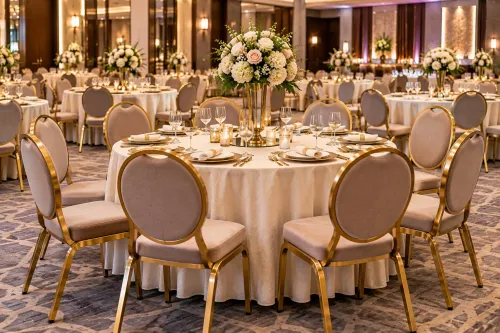
For a banquet seating layout, place chairs at their event-use position, pull out one chair at every table, and walk the route with a loaded tray. If a chair cannot slide back without blocking the next table or aisle, reduce the seating count or choose a narrower frame.
Mark the floor during the trial; published chair dimensions rarely show the operating clearance.
Verify frame strength, stability and commercial testing
A stated maximum weight proves only that a chair supported a load during one test. It does not show how the frame behaves after thousands of guests lean back, pull away from tables or drop into the seat.
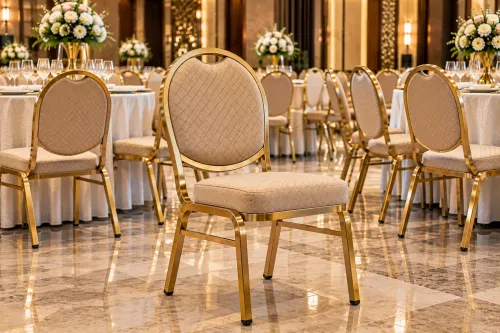
For a commercial-grade restaurant chair, require a report for the exact model and construction, tested against a recognized seating standard such as ANSI/BIFMA X5.1.
Ask the supplier for evidence that:
- The report identifies the exact frame, joints, seat, back, upholstery and glides; a visually similar chair is not equivalent.
- Testing includes backrest durability, seat-and-back static loading, leg strength, front-edge loading and repeated impact.
- Production checks record weld quality, joint finish and any distortion after assembly.
- The sample passes a leg alignment and wobble test on a level surface before you assess comfort or appearance.
Test a production sample on the actual Gurgaon floor finish, not only on a factory floor. Grout lines, uneven stone and loose glides can make a sound frame rock, while replaceable glides help correct small floor variations.
Push the chair from each side, sit near the front edge and apply controlled rearward pressure; movement, creaking, cracked welds or a leg lifting off the floor are disqualifying signs. Retest after stacking or trolley handling if the chairs serve banquets, because transport impacts create failures that a single weight rating will not reveal.
Match the chair material to Gurgaon’s operating environment
For Gurgaon, choose the material according to exposure, cleaning frequency and whether the venue can store chairs under cover during monsoon weather.
| Setting | Recommended choice | Check before approval |
|---|---|---|
| Indoor dining room | Wood or powder-coated metal; upholstered restaurant chairs for longer stays | Confirm stain-cleaning limits, seam construction and replaceable glides |
| Café | Moulded plastic chairs or powder-coated metal | Select wipe-clean surfaces and finishes that resist scratching from constant movement |
| Rooftop | Powder-coated metal, preferably with sealed tube ends | Verify rust resistance, corrosion warranty and protection at welds, holes and fasteners |
| Terrace or semi-outdoor venue | Metal with an exterior-rated coating; plastic for lighter, stackable seating | Keep upholstery and untreated wood under cover; inspect coating damage after monsoon |
Metal versus wood chairs involve different maintenance risks. Wood gives warmth indoors but needs protection from swelling, staining and repeated wet cleaning; exposed wood is a poor choice for an uncovered terrace. Metal tolerates intensive use, but corrosion starts at welds, tube ends, drilled holes and damaged coating rather than the centre of a tube.
Specify powder coating thickness, substrate preparation, sealed or capped tube ends and corrosion-resistant fasteners. Ask for inspection photographs of hidden areas and a repair method for chips. ASTM B117 salt-spray results alone do not predict rooftop life, so demand the actual service warranty.
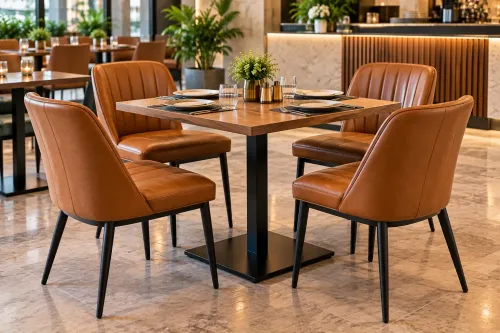
For upholstered restaurant chairs, identify the fabric or polyurethane composition, hydrolysis or flex resistance, cleaning limits and replacement availability. Low-cost polyurethane can turn tacky, crack or delaminate in Gurgaon’s heat and humidity. Evaluate the exact chair construction against ANSI/BIFMA X5.1, not a similar-looking model.
Specify cleaning, storage and production checks before approval
Require these documents and checks before approving a supplier for a high-turnover restaurant or banquet operation:
1. Request a written cleaning schedule that names compatible chemicals, dilution ratios and contact times. Specify wipe-clean upholstery, sealed frame edges, accessible undersides and closed-cell or non-absorbent surfaces where food spills are frequent. Reject deep buttoning, open stitching and unsealed plywood edges that trap moisture and crumbs.
2. Define storage performance in numbers. For stackable banquet chairs, state the required stack count, whether chairs stack on the seat or a dolly, the maximum height and whether staff can move the stack without scratching frames or crushing upholstery.
3. Specify floor protection before production begins. Require replacement glides and identify their material, noise level and suitability for your tile, polished stone or resilient flooring. Ask whether staff must lift chairs or can slide them without marking the floor.
4. Inspect a pilot batch inspection sample before releasing the full order. Check dimensions, rocking, weld finishing, coating defects, upholstery tension, seam alignment, odour, floor marking and packaging damage across several chairs, not one showroom sample.
5. Obtain the test report for the exact construction, including frame, joints, seat, back, upholstery and glides, against ANSI/BIFMA X5.1 or another named seating standard. The Comfort Seatings, like any supplier, should identify the upholstery composition, coating, ageing resistance, stain-cleaning limits and replacement availability; a similar-looking model is not proof of equivalent performance.
Related products
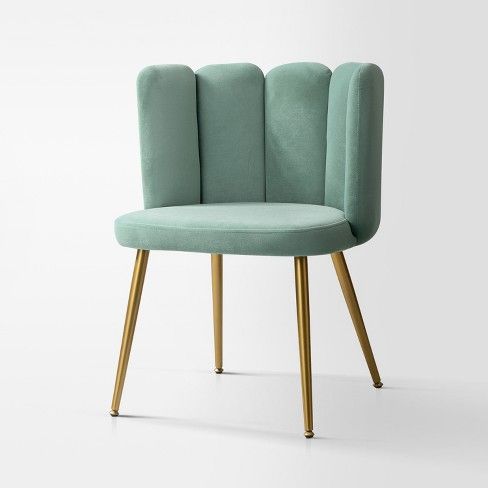 | Restaurant Chair Upgrade your dining space with the perfect blend of durability, style, and comfort from The Comfort Seatings. View product → |
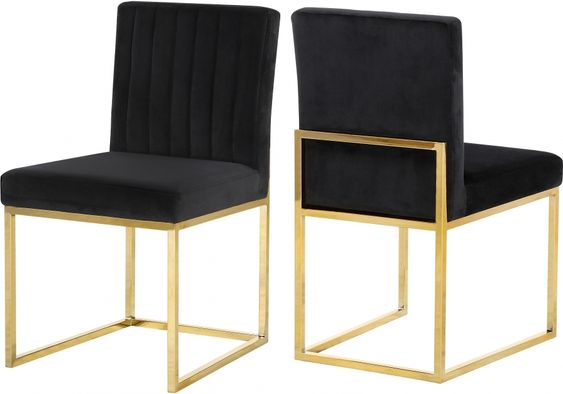 | Restaurant Chair Upgrade your dining space with the perfect blend of durability, style, and comfort from The Comfort Seatings. View product → |
Frequently asked questions
What seat height suits a restaurant chair in Gurgaon?
Start with a seat height of about 450–480 mm, then confirm the chair against the selected table.
How much clearance should a restaurant chair have beneath the table?
Leave roughly 260–300 mm between the compressed seat top and the table underside, accounting for cushion compression.
What should you verify in a commercial restaurant chair frame?
Check frame strength, stability, joints, load-bearing construction and evidence of commercial testing before approval.
Which restaurant chair materials suit Gurgaon operations?
Match upholstery, wood, metal and finishes to Gurgaon’s heat, dust, moisture exposure and cleaning schedule.
Related products
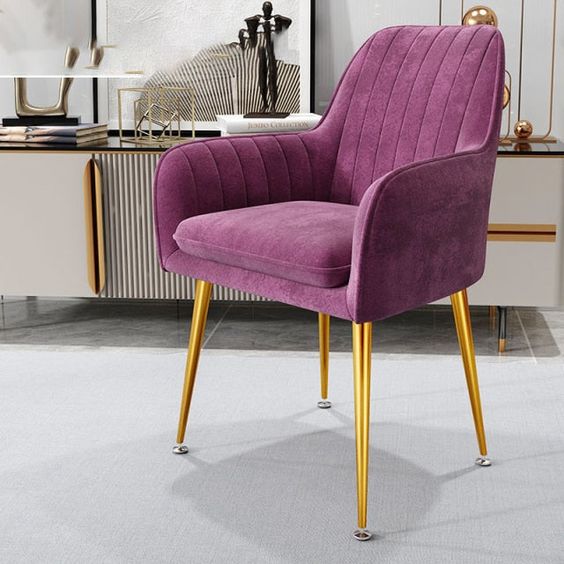 | Restaurant Chair Upgrade your dining space with the perfect blend of durability, style, and comfort from The Comfort Seatings. View product → |
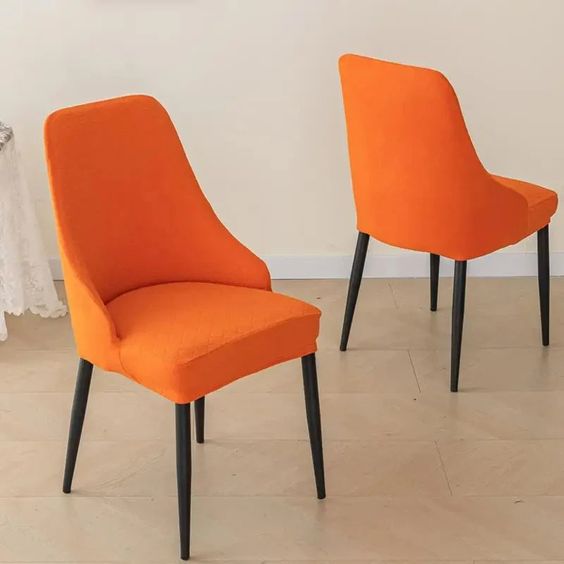 | Restaurant Chair Upgrade your dining space with the perfect blend of durability, style, and comfort from The Comfort Seatings. View product → |
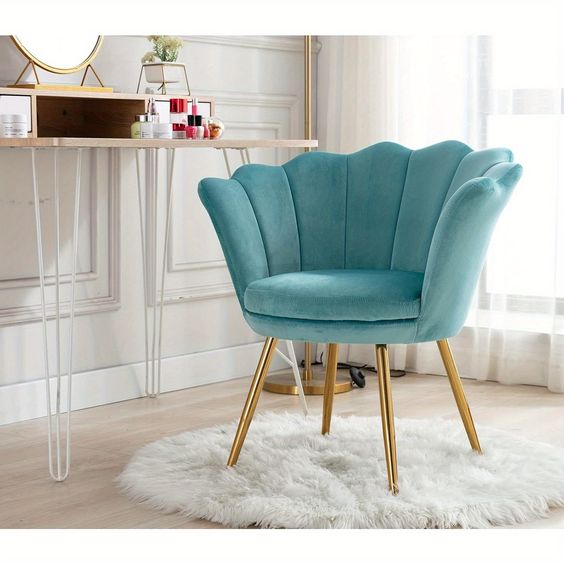 | Restaurant Chair MRC-8 Upgrade your dining space with the perfect blend of durability, style, and comfort from The Comfort Seatings. |
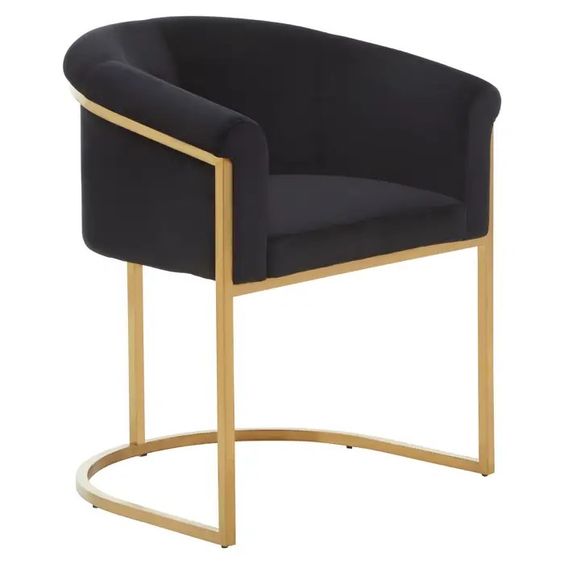 | Restaurant Chair Upgrade your dining space with the perfect blend of durability, style, and comfort from The Comfort Seatings. View product → |